What is EXIF 13.59 Data Software?
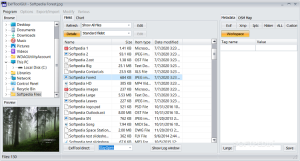
When private location markers or incorrect camera settings need updating, using an online EXIF viewer or Python EXIF library allows you to inspect embedded attributes directly to modify corrupted tag headers without touching your underlying pixel data, photos or visual quality. Standard command utilities like exiftool act as specialized metadata management tools for digital imagery captured across digital cameras, mobile phones, and editing software. Instead of relying on guesswork to determine camera settings, running a quick exiftool image.jpg command allows you to inspect and modify detailed exchangeable image file format parameters instantly. EXIF data software acts as a specialized metadata management tool for digital imagery captured across digital cameras, mobile phones, and editing software. Beneath its clean interface lies a heavy-duty metadata extraction engine built to process hundreds of embedded file attributes, including camera model information, exposure settings, GPS coordinates and timestamp records. It also gives you an easy way to view hidden exposure properties or strip metadata before publishing images online while quickly cleaning up unneeded tags that usually expose unwanted location history.
What makes it worth using?
Having a dedicated browser based utility or programmatic library to inspect EXIF headers saves time. Parsing binary image segments manually or wrestling with hexadecimal hex dumps often leads to corrupt files but this utility handles those background parsing steps automatically. What sets this tool apart is how it simplifies complex technical metadata operations that usually demand specialized hex editors or manual terminal commands. Processing image files directly in the browser ensures client side privacy, keeping local photo data completely secure on your machine without external uploads. If you prefer working locally, client side metadata editors provide a zero-upload environment tailored for privacy-focused workflows. It serves as an effective safeguard when sharing photos publicly, giving you a reliable way to sanitize personal location coordinates before uploading imagery to public repositories.
Key Features
- Smart Array & List Mapping: Parses multi-valued signed rational structures and directional GPS coordinate arrays with precise floating-point conversions.
- Lossless EXIF Stripping: Completely removes private tracking markers, location history, and camera details without re-encoding or degrading visual image quality.
- UTF-16 Character Decoding: Correctly parses extended text fields, including Windows XP style title tags, user comments, and unicode author descriptions.
- Browser-Based Client Security: Executes all image processing locally within your client browser, ensuring zero raw image data uploads to external servers.
- Multi-Format Tag Enumeration: Automatically translates raw numerical camera data into readable values for aperture, shutter speed, metering mode, and focal length.
- Dynamic Tag Memory Re-Packing: Dynamically expands metadata structures when adding custom tags to prevent byte corruption in previously un-tagged image headers.
- Complete Metadata Tag Extraction: Reads standard, GPS, and custom camera IFD tag structures directly from JPEG and TIFF image containers.
- Embedded Thumbnail Extraction: Extracts and displays raw thumbnail image previews directly from embedded EXIF binary blocks.
System Requirements
Running metadata processing applications delivers a lightweight, responsive experience that inspects photo attributes quickly across modern operating systems. Web-based deployments run natively across major browser engines, while scriptable libraries integrate smoothly into system terminal environments. Exiftool download windows 11 setup gives you a direct way to work with image attributes locally.
For MacOS:
Storage: 50 MB free disk space for local installation files.
Environment: Modern HTML5 browser (Safari, Chrome, Firefox) or Python 3.7+ environment.
Operating System: macOS 10.13 (High Sierra) or later (macOS 14+ recommended).
RAM: 512 MB minimum (2 GB recommended for heavy image inspection).
For Windows:
Operating System: Microsoft Windows 7, 8, 8.1, 10, or Windows 11 (32-bit or 64-bit).
Storage: 50 MB free disk space for local script dependencies or browser cache.
RAM: 512 MB minimum (2 GB recommended for large RAW or JPEG batch processing).
Environment: Modern HTML5 browser (Chrome, Firefox, Edge) or Python 3.7+ environment using an exiftool for windows installer.
What’s New in EFix 13.59?
- Upgrading to the latest EXIF release introduces critical tag mappings and performance optimizations based on updates:
- Added robust exception handling to omit corrupt or unknown attribute values cleanly without interrupting metadata batch extraction.
- Improved binary data packing logic to insert newly created tags directly after existing value blocks instead of appending to trailing unused bytes.
- Added native reading and writing support for rating and rating_percent image metadata tags.
- Expanded camera parameter mapping to include focal_plane_x_resolution and focal_plane_y_resolution tags.
- Corrected APP1 segment size calculation issues and resolved offset bugs on newly generated image metadata structures.
- Fixed attribute calculation errors within IFD value checks that previously caused unintended edits to untouched properties like components_configuration.
- Updated internal byte processing dependencies to utilize modern, stable library architectures.
- Introduced full attribute mapping support for photographic_sensitivity parameters across standard image sets.
Frequently Asked Questions (FAQ)
What happens if an image is saved without any existing EXIF structures?
The software dynamically generates a valid APP1 metadata segment. It injects fresh IFD pointers without corrupting underlying file headers.
Is it possible to edit or overwrite camera GPS coordinates after taking a photo?
Yes, metadata editors allow full modification of directional tags. You can update latitude, longitude, and altitude values before export.
Can EXIF software repair corrupted pixel data or physically blurry photos?
No, the tool operates strictly at the metadata header level. Physical sensor noise, out-of-focus blur, or corrupted image pixel streams require visual editing software.
How much free disk space is required on my host computer before starting?
Browser utilities require virtually no disk space, while programmatic libraries need under 50 MB of disk storage for installation dependencies.
Will stripping metadata degrade the visual quality of my original photograph?
No, removing metadata headers targets auxiliary data segments only. It leaves compressed image bitstreams untouched, preserving exact pixel fidelity and quality.
Does metadata editing erase my original RAW camera file back-ups?
No, metadata tools work on specified file instances. They create edited duplicate exports while leaving master source files unmodified on your drive.
Do I need to upload my sensitive photos to a remote server for processing?
No, modern web based metadata tools run entire extraction workflows client-side within JavaScript sandboxes, guaranteeing that images never leave local storage.
More softwares:
Conclusion
From removing location markers to verifying exposure settings, EXIF software delivers effortless reliable control over your digital photography headers. Download exiftool package for free or use built-in exiftool gui interface, managing camera metadata, tag edits, and privacy sanitization is simple with modern EXIF data software. By combining intuitive web interfaces with robust header parsing engines, it saves both time and complex terminal effort. Beyond basic file inspection, it serves as an essential, all in one utility for modern digital image maintenance. Its automated process eliminates manual hex-editing troubleshooting while keeping your core image data completely intact.
